



ABOUT ME
Curiosity Before A Career
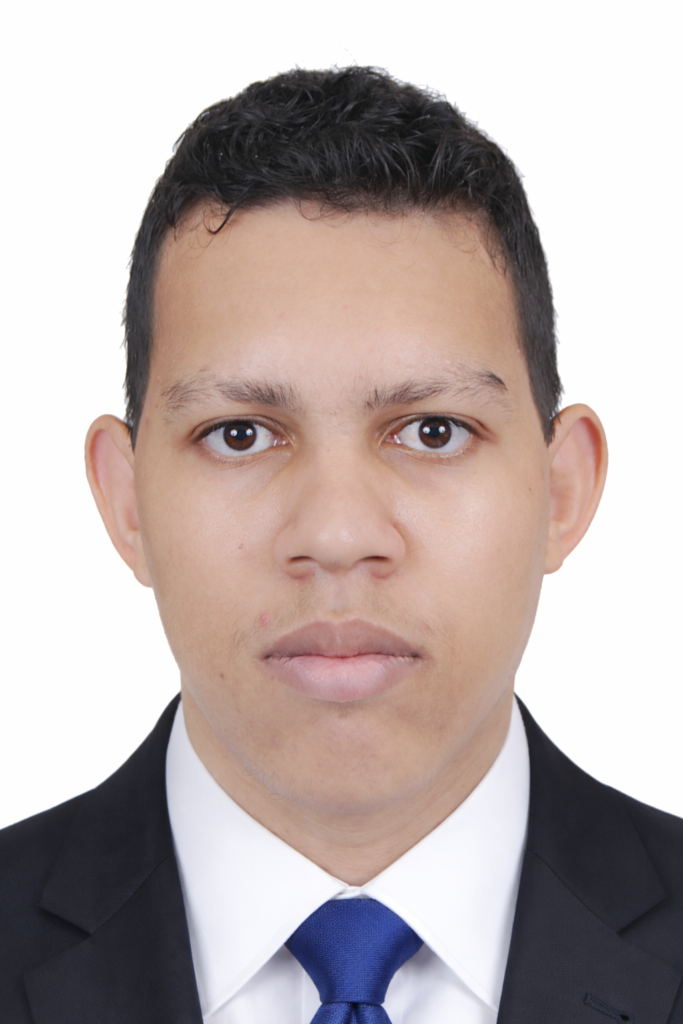
I’m Achraf Chaddad, a Life Sciences student, aspiring researcher, and lifelong learner driven by a deep curiosity about life, knowledge, and the mechanisms that shape biological systems.
My relationship with science did not begin at university; it reaches much further back, into my childhood. Long before I could define what scientific research meant, curiosity was already shaping the way I interacted with the world around me.
I read extensively, from children’s stories and magazines to general science sections, which quickly became my favourite. As science entered my formal education, that curiosity became increasingly experimental. I recreated simple experiments on the rooftop and in the garden of my home, collected discarded electronics and miscellaneous materials for things I wanted to build or investigate, grew plants, and once even built a shelter for ants and stocked it with grains of wheat.
At the same time, my interest in French and English opened another window into knowledge. Foreign television channels, documentaries, and National Geographic became part of the way I discovered science and a world extending far beyond the classroom.
From Science to the Life Sciences
As I progressed through school, science gradually ceased to be a single subject and became a collection of disciplines: physics, chemistry, mathematics, and life and earth sciences. I performed strongly across them, but biology stood apart. Observation, analysis, interpretation, and scientific reasoning came naturally to me, and Life and Earth Sciences consistently became one of my strongest subjects.
When the time came to choose between literary and scientific studies, I chose science and went a step further by enrolling in the newly introduced French-option International Baccalaureate track in Morocco.
The transition was demanding. After years of studying science in Arabic, I suddenly had to learn, reason, analyse, and communicate scientifically in French. Even before the school year began, I was searching for scientific terminology in French and trying to formulate explanations in the language.
During the experimental sciences track, biology became increasingly important to me. I began exploring beyond the curriculum, and my curiosity gradually moved toward DNA and the structure of biological macromolecules.
That period also led to one of my earliest competitive scientific experiences: I was selected to participate in the Biology Olympiad (ONBio 2017-2018-2019) and progressed through successive stages to the penultimate round, eventually remaining my high-school’s last representative in the competition. Preparing for it pushed me beyond my own coursework. I studied material from other levels and independently searched for scientific resources.
I eventually completed a French-option scientific baccalaureate in Physics and Chemistry with honours, while my interests in biology, languages, writing, and philosophy continued to develop in parallel.
Finding My Scientific Direction
For a long time, I imagined my future in medicine, particularly in neurosurgery. I was fascinated by the extraordinary complexity of brain surger, the precision it demands, the long procedures involving multidisciplinary teams, and the intersection of knowledge, technical skill, responsibility, and human care. I saw medicine not merely as a profession, but as a humanistic art and a duty before it was a source of income.
With time, however, reflection on my own path led me to recognise something that had been present much earlier: what fascinated me most was not only treating biological systems, but understanding them.
The questions that continually drew me back were increasingly molecular: How is biological information stored and transmitted? How do molecules interact? How do cells regulate themselves? How can a change at the molecular level eventually become a phenotype, a genetic disease, or a pharmacological effect?
In retrospect, the affinity I had shown for the life sciences throughout school was not something I needed to leave behind in pursuit of another discipline. It was something worth following in its own right.
I also came to reject the idea that the life sciences were merely disciplines of memorisation or a secondary route for those who did not pursue medicine. To me, biology had become precisely the opposite: a field of mechanisms, hypotheses, experimentation, reasoning, and unanswered questions.
Choosing the life sciences did not mean moving away from medicine. Modern biomedical research exists precisely at the interface between biologists, biochemists, bioinformaticians, physicians, engineers, and many other disciplines.
What changed was my understanding of where I wanted to stand within that landscape.
From the Cell to the Molecule
At university, Cell Biology gave my curiosity a new scale. I performed particularly well in the subject, but more importantly, I began to discover life as a system of cellular structures, interactions, and mechanisms. Images such as the DNA double helix and the fluid mosaic model of the cell membrane remained especially vivid in my mind.
The more I read and observed, the clearer something became to me: many phenomena we perceive at the organismal level, from inherited traits and genetic diseases to the effects of drugs, ultimately emerge from events occurring at molecular, and sometimes atomic, scales.
I wanted to understand what was happening beneath what could be directly observed.
This drew me increasingly toward Molecular Biology and Biochemistry. I became fascinated by DNA replication, transcription, translation, their regulation, and the mechanisms connecting them.
At the same time, I immersed myself in the molecular vocabulary of lifea : amino acids, carbohydrates, lipids, vitamins, proteins, and their structures, not merely to memorise them, but increasingly to understand how structure gives rise to interaction, function, and mechanism.
Learning soon extended far beyond the curriculum. I searched through books, borrowed extensively from libraries, read scientific articles, and explored scientific resources online.
I was looking for something more than academic performance. I wanted to taste science itself.
And the more I learned, the more learning seemed to create its own thirst: a growing awareness that entering knowledge also means discovering the scale of what remains unknown.
Why Biochemistry?
My way of reasoning gradually drew me toward the chemical foundations of living systems.
Behind a cellular process lies a network of molecular interactions and chemical reactions. Behind the activity of an enzyme, a drug, or a signalling pathway lie questions of structure, affinity, energetics, kinetics, catalysis, and molecular recognition.
Biology showed me what living systems do, Biochemistry offered a language for investigating how many of those processes become chemically possible.
Biochemistry eventually became an interest in its own right. Although I found the field broadly fascinating, Enzymology and Structural Biochemistry particularly captured my attention.
They allowed me to connect molecular structure with interaction, function, and mechanism to ask not only whether a biological reaction occurs, but why it occurs, how it is catalysed, what determines its efficiency, and how changes in molecular structure can alter biological function.
This progressively reinforced an idea that continues to shape my scientific interests: Structure, interaction, function, and mechanism cannot be understood in isolation.
Biology as Information
Bioinformatics emerged naturally from another observation: biological molecules are not only structures, they also carry information.
DNA can be represented through an alphabet of four nucleotides, while protein sequences can be represented through the twenty standard amino acids. Looking at genomes and proteomes from this perspective gave them another dimension: they could be approached not only as biological entities, but also as information that could be represented, compared, searched, and analysed computationally.
A sequence of a given length defines an enormous space of possible combinations, yet biological reality occupies only a fraction of that space. Some sequences can produce stable and functional molecules, others cannot, and seemingly small changes can sometimes produce profound biological consequences.
At the same time, the extraordinary growth of biological data: from genomic and proteomic sequences to structures and large-scale experimental datasets made something else increasingly clear to me: The modern biologist increasingly needs a computational eye.
It is no longer enough to generate or access biological data. We must also be able to navigate its scale, recognise patterns, formulate questions, and ultimately transform information into biological meaning.
This is what drew me toward Bioinformatics and computational approaches: not as a departure from experimental biology, but as another way of interrogating the same biological reality.
Learning Beyond the Curriculum
In 2020, I began building a parallel self-directed learning programme alongside my formal education. I wanted to complement an academic system structured around curricula, examinations, and measurable performance with another form of learning centred on exploration, practical skills, experience, and intellectual independence sustained by passion and by the hope of continually becoming capable of understanding and doing more.
Programming became an important part of that effort. After taking Python for Everybody, I continued learning Python independently and subsequently explored R, Java, and MATLAB. My objective was never simply to accumulate programming languages, but to develop the computational literacy needed to approach scientific problems from another perspective.
Over time, this self-directed programme expanded beyond programming. I used online courses, books, scientific literature, and other educational resources to identify gaps in my knowledge, strengthen areas that interested me, and explore subjects beyond the boundaries of my university curriculum.
For me, learning science is not simply about accumulating knowledge. It is a process of observation, reasoning, analysis, investigation, and experimentation of asking questions, examining evidence, connecting ideas across disciplines, and continuously refining what I think I know.
Above all, I seek to build coherence across knowledge: to understand how seemingly separate concepts relate to one another and how they can form a more unified understanding of reality.
Writing, Ideas & Expression
Writing has long been another way through which I explore and express ideas. What fascinates me about it is its freedom: a page does not have to impose the boundaries of a discipline, a language, or even a medium.
I can move between languages, incorporate a piece of code, sketch something, analyse an idea, or write something whose meaning I may simply choose to keep for myself.
Alongside scientific writing and the analysis of research literature, I became interested in blogging and science communication, particularly in translating complex scientific ideas into forms that can be explored and understood by wider audiences.
At the same time, I continue to explore both literary and scientific writing, with projects developing across these areas.
For me, writing is therefore not separate from thinking. It is a space for analysis, synthesis, imagination, and expression sometimes to communicate an idea to others, and sometimes simply to understand it more clearly myself.
Teaching & Sharing Knowledge
Teaching became another important dimension of my relationship with knowledge during my early university years. I found particular satisfaction in explaining complex concepts in a way that remained scientifically rigorous while being accessible to the learner.
One principle became especially important to me: difficulties in understanding are sometimes rooted not in the concept being taught, but in prerequisites that the learner is missing and that the teacher may not realise are missing.
From 2021 to 2023, I developed Cytologie Simplifiée, a volunteer educational initiative through which I taught Cell Biology to several groups of students.
Preparing lessons became as valuable to me as teaching them. It continually pushed me to revisit concepts, search more deeply, identify gaps in conventional explanations, and ultimately learn more myself.
I gradually became interested not only in what we teach, but in how people learn. I sought to make learning more interactive and immersive, encourage questioning and curiosity, and help students progressively become independent learners rather than passive recipients of information.
During this period, I also worked independently as a private tutor in Cell Biology and Biochemistry.
Teaching therefore became reciprocal for me: The more seriously I tried to help others understand, the more deeply I had to understand myself.
A Continuing Quest
Je n’ose revendiquer avoir découvert, au cours de cette quête, cette recherche et ce mémoire, une innovation affranchie de toute empreinte de conformisme. Certes, il est difficile, voire impossible, de créer sans exemple pour quelqu’un d’autre que le Créateur. Si j’ai un résultat qui mérite que je le garde pour moi et que je le préserve en mon sein, chéri en solitaire dans l’intimité de mes pensées et de mon intuition, c’est bien cette sensation naissante d’apprentissage, cette sensation que j’ai commencé enfin à apprendre plus profondément.
— Achraf Chaddad, Préface of the undergraduate final-year project (PFE), L’intérêt de la PCR multiplex dans le diagnostic biologique, 2024.
I would not dare claim that, throughout this journey of inquiry, learning, and reflection, I have produced something entirely free from the imprint of what came before me. Novelty is possible, and so is genuine innovation, but neither necessarily emerges in isolation.
In science, we investigate a reality that precedes us and build upon generations of accumulated knowledge. In writing, ideas and projects may be distinctly our own while still carrying traces of the books we have read, the people we have encountered, and the experiences that have shaped us.
I have therefore become less interested in claiming absolute originality than in asking whether I have observed carefully, reasoned independently, questioned assumptions, connected ideas coherently, and contributed something meaningful of my own.
Yet if there is one result of this journey that I consider precious enough to preserve within the intimacy of my own thoughts and intuition, it is a feeling: the feeling that I have finally begun to learn and, more importantly, that I have begun to learn more deeply.
This is also where I find the meaning of scientific humility. To me, it is not about diminishing oneself in relation to others, but about recognising the limits of one’s own knowledge. The more I learn, the more clearly I become aware of the vast territory that remains beyond what I know. In that sense, however far I may progress, I remain small before the scale of knowledge itself.
This awareness does not diminish my ambition; it gives it direction. It reminds me to question what I think I know, remain open to correction, and approach uncertainty not as a weakness, but as an essential part of scientific inquiry.
Scientific success, to me, is not defined by a medal, an award, a promotion, or a citation count. Its most meaningful form is much quieter: that moment when something previously obscure begins to make sense; when observation becomes a question, a question becomes reasoning, and reasoning gradually opens another fragment of reality to understanding.
Recognition can accompany science, but it is not what gives science its meaning to me.
Perhaps the most important consequence of learning is discovering how much remains to be learned. I do not expect to know everything. On the contrary, I expect the frontier of what I do not know to keep expanding as I learn. Rather than discouraging me, that is precisely what keeps me moving forward.